Introduction
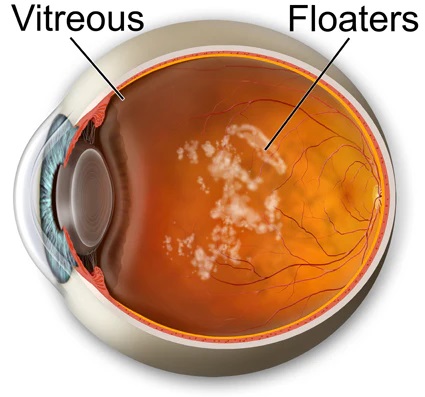
Eye Floaters in Older Adults. So then, many older adults notice small drifting shapes in their vision. Such as, tiny specks, threads, or cobweb-like shadows that seem to float across their field of view. Here, these are known as eye floaters, and while they are usually harmless, they can signal a more serious issue. However, understanding what floaters are, why they occur with age, and when to seek help can make a real difference to long-term eye health.
What Are Eye Floaters in older Adults?

Eye Floaters in Older Adults. As a result, eye floaters are small clumps or strands inside the vitreous humour—the clear, gel-like substance that fills the inside of your eye.
Consequently, as light enters the eye, these tiny particles cast shadows on the retina, which is why you “see” them drifting around.
Common descriptions include:
Shadowy blobs that move when your eyes move
Black or grey dots
Squiggly lines
Cobweb or thread-like shapes
A Brief History of Understanding Floaters

Eye Floaters in Older Adults. Also, floaters have been observed for centuries, but early physicians did not fully understand their cause. And ancient Greek and Roman scholars described them as “flying flies” in vision.
Subsequently, modern understanding improved significantly in the 19th and 20th centuries with advances in ophthalmology, revealing that floaters are linked to changes in the vitreous gel—especially with ageing.
Why Are Floaters Age-Related?
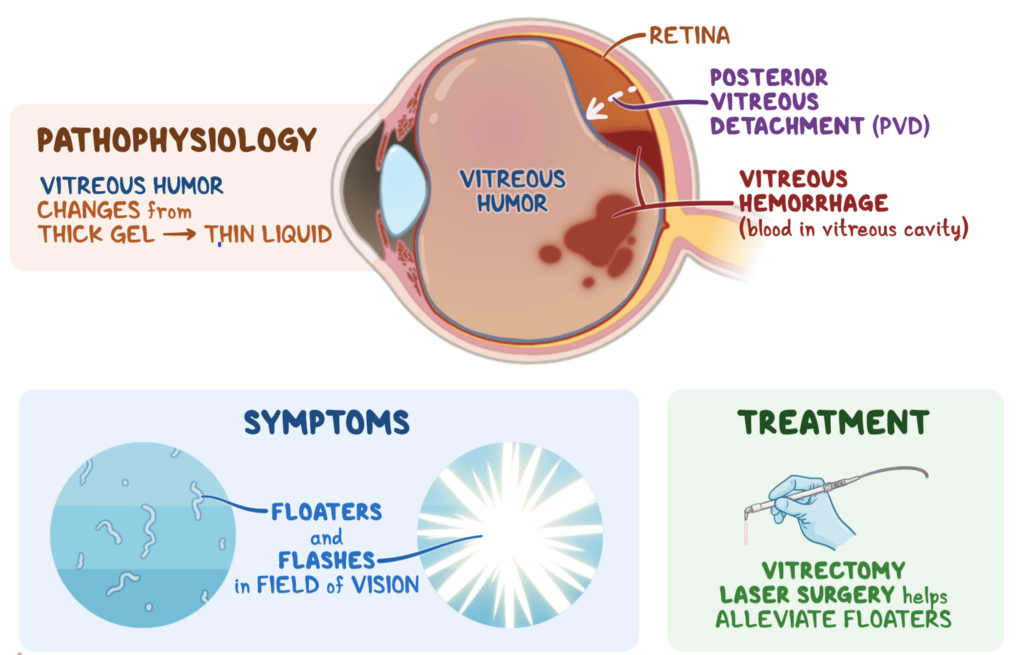
Eye Floaters in Older Adults. However, as we age, the vitreous gel inside the eye begins to change:
1. Shrinkage of the Vitreous
The gel gradually becomes more liquid (a process called vitreous liquefaction).
2. Clumping of Fibres
Tiny collagen fibres inside the vitreous start to clump together—these form floaters.
3. Posterior Vitreous Detachment (PVD)
Eventually, the vitreous can pull away from the retina. This is very common after age 50 and often causes a sudden increase in floaters.
This is why floaters are especially common in adults over 60.
Symptoms of Eye Floaters
Most floaters are easy to recognise and behave in predictable ways:
- Move when your eyes move
- Drift away when you try to look directly at them
- More noticeable against bright backgrounds (sky, white walls)
⚠️ Warning Signs to Watch For
While floaters are usually harmless, seek medical advice if you notice:
- A sudden shower of new floaters
- Flashes of light (like camera flashes)
- A dark curtain or shadow over part of your vision
- Sudden blurred or reduced vision
These could indicate more serious conditions.
Are Eye Floaters Dangerous?
✅ Usually Harmless
In most cases, floaters are a normal part of ageing and do not require treatment.
⚠️ Sometimes Serious
Floaters can occasionally be linked to:
- Retinal tear
- Retinal detachment
- Eye injury
- Inflammation inside the eye
👉 These conditions require urgent medical attention to prevent vision loss.
Treatment Options
1. No Treatment (Most Common)
Your brain often learns to ignore floaters over time. Many people find they become less noticeable.
2. Vitrectomy (Surgical Option)
A procedure that removes the vitreous gel and replaces it with a clear solution.
- Effective but invasive
- Usually only recommended in severe cases
3. Laser Treatment (Vitriolysis)
Laser is used to break up floaters.
- Less invasive than surgery
- Not suitable for all types of floaters
Practical Tips for Managing Floaters
✔ Move your eyes up and down to shift floaters out of your line of sight
✔ Wear sunglasses to reduce glare
✔ Maintain regular eye check-ups
✔ Control underlying conditions like diabetes and high blood pressure
✔ Stay hydrated and maintain good overall nutrition
When Should Older Adults Get Checked?

You should arrange an eye examination if:
- Floaters suddenly increase
- You see flashes of light
- You have a history of eye problems
- You are over 60 and notice any vision changes
Early detection is key to protecting your eyesight.
Final Thoughts
In summary, eye floaters are a common part of ageing and, in most cases, are nothing to worry about. However, knowing the warning signs of more serious conditions can help you act quickly if needed.
But for older adults, regular eye checks are just as important as maintaining strength, balance, and nutrition.
The Stronger for Longer Series on Amazon Books




These E-Books were written for older adults who want to understand how to stay Stronger for Longer because remaining strong means living long
1 ASIN: B0GQZL9SCH 2 ASIN: B0GR9BVY5L 3 ASIN: B0GRJ7ZQ3C 4 ASIN: B0GRMCJ6SH 5 ASIN: B0GRRRN4M5
In Conclusion
Eye health is extremely important. Many people don’t notice any signs or symptoms in the early stages of eye diseases. A dilated eye exam performed by an eye care professional is the only way to find some common eye diseases while they’re easier to treat — and before they cause vision loss.
Everyone over age 50 should have a dilated eye exam every year or as recommended by your eye care professional, even if you have good vision and don’t wear contacts or glasses. After age 60, you should get a dilated eye exam every year or two. Most people with diabetes or high blood pressure need to get a dilated exam at least once a year.
Important Note *
Remember that everyone is different, and it is ultimately YOUR RESPONSIBILITY to find what your body responds to. So please do your due diligence before trying anything new, including getting Medical Advice to ensure your safety and peace of mind.
Connect with me and leave a comment or two on my social media.