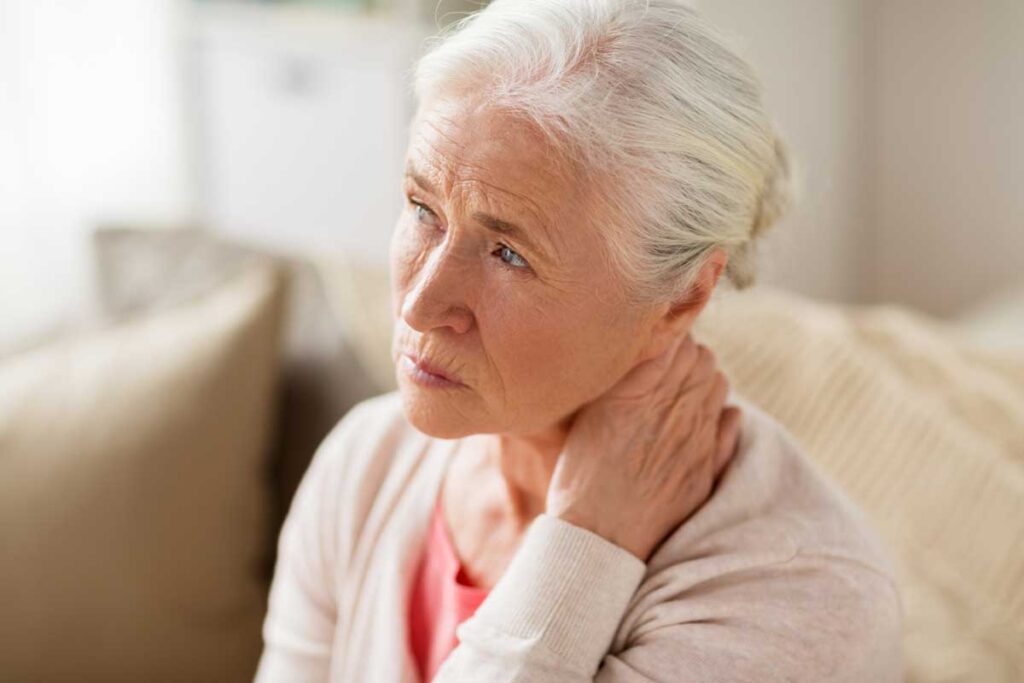
Neck Pain and Stiff Neck in Older Adults
Causes, Symptoms, and Effective Relief Strategies
Neck Pain in Older Adults. Here, neck pain and stiffness are extremely common, particularly as we grow older. However, for some, it’s a mild daily nuisance; for others, it can significantly restrict movement, disturb sleep. And reduce independence. But understanding why neck pain occurs — and how to manage it safely — is the first step towards relief.
What Is Neck Pain or a Stiff Neck?

Neck Pain in Older Adults. Consequently, neck pain refers to discomfort, tightness, soreness, or reduced movement in the cervical spine. (the seven vertebrae at the top of the spine). As a result, a stiff neck is often marked by difficulty turning the head from side to side or looking up and down.
Pain may be:
- Radiating into the arms (in some cases)
- Localised to the neck
- Spread into the shoulders or upper back
A Brief History of Neck Pain

Neck Pain in Older Adults. Furthermore, neck pain has affected humans for as long as we have walked upright. Also, early medical writings from ancient Egypt, Greece, and China describe neck stiffness and spinal disorders, often attributed to injury, posture, or ageing.
In modern times, neck pain has become even more common due to:
- Prolonged sitting
- Desk and screen use
- Reduced daily movement
Ironically, today’s “comfort-focused” lifestyles have created new stresses on the neck and spine.
Why Neck Pain Is More Common in Older Adults

Neck Pain in Older Adults. So then, as we age, natural changes occur in the spine and surrounding tissues:
- Degeneration of cervical discs (loss of cushioning)
- Reduced muscle elasticity
- Joint wear and tear (osteoarthritis)
- Slower recovery from strain or injury
- Postural changes (forward head posture, rounded shoulders)
As an example, these factors make the neck more vulnerable to stiffness, pain, and inflammation.
Common Causes of Neck Pain and Stiff Neck
Mechanical & Lifestyle Causes
- Poor posture (especially looking down at phones or tablets)
- Sleeping in awkward positions
- Prolonged sitting or inactivity
- Muscle tension from stress or anxiety
Age-Related Conditions
- Cervical osteoarthritis
- Degenerative disc disease
- Spinal stenosis
Injuries & Strain
- Sudden movements or lifting
- Minor falls
- Repetitive strain
Medical Causes
- In rare cases: infection or tumour
- Nerve compression
- Herniated discs
- Inflammatory conditions
Symptoms to Watch For

- Neck pain can present in several ways:
- Tingling or numbness (possible nerve involvement)
- Stiffness or reduced range of motion
- Dull aching or sharp pain
- Muscle tightness or spasms
- Headaches starting at the base of the skull
- Pain spreading to shoulders or arms
Seek medical advice urgently if neck pain is accompanied by:

- Fever or unexplained weight loss
- Severe or sudden pain
- Weakness in arms or hands
- Loss of balance
Medical Treatment Options
Neck Pain in Older Adults. Subsequently, if neck pain persists or worsens, medical treatment may include:
- Pain relief medication (paracetamol, anti-inflammatories)
- Muscle relaxants (short-term use)
- Physiotherapy
- Postural assessment
- Corticosteroid injections (in specific cases)
- Imaging tests (X-ray, MRI if nerve symptoms are present)
Surgery is rare and usually only considered for severe nerve compression.
Home Remedies and Self-Care for Neck Pain
Hence, many cases of neck pain improve with simple, consistent home care.
1. Gentle Movement
Above all, avoid keeping the neck still for long periods. Generally, gentle daily movement helps maintain mobility and blood flow.
2. Heat and Cold Therapy
- Heat relaxes tight muscles
- Cold reduces inflammation after strain
3. Improve Posture
- Keep screens at eye level
- Sit tall with shoulders relaxed
- Avoid prolonged forward head posture
4. Supportive Sleep Position
- Use a pillow that supports the natural curve of the neck
- Avoid sleeping on your stomach
5. Gentle Neck Exercises
Examples include:
- Slow head turns
- Side bends
- Chin tucks
- Shoulder rolls
(Always pain-free and controlled)
6. Stress Reduction
Here, tension often settles in the neck and shoulders. But breathing exercises, relaxation, and gentle stretching can significantly reduce pain.
Can Neck Pain Be Prevented?
Neck Pain in Older Adults. So then, while ageing cannot be stopped, neck pain can often be reduced by:
- Staying physically active
- Maintaining strength and flexibility
- Practising good posture
- Avoiding long periods of inactivity
- Addressing pain early rather than ignoring it
Small daily habits make a big difference over time.
Pensioner Fitness – Helping You Stay Strong, Steady, and Self-Reliant
Pensioner Fitness Awards
THE BUSINESS CONCEPT, BEST IN BUSINESS AWARDS
- “MOST INSPIRING SENIOR WELLNESS WEBSITE 2023“
THE GLOBAL HEALTH AND PHARMA, FITNESS AND NUTRITION AWARDS
2. “BEST SENIOR FITNESS AND NUTRITION SPECIALIST 2023“
THE MIDDLE EAST AND AFRICA BUSINESS AWARDS
3. “ MOST INCLUSIVE FITNESS PROVIDER 2023″
THE CORPORATE LIVE WIRE GLOBAL AWARDS 2023/2024
4. ” FITNESS ADVISORY PLATFORM OF THE YEAR“ 2023/2024
In Conclusion
Neck Pain in Older Adults. Therefore, neck pain and stiffness are not an inevitable part of ageing. But they are common and manageable. And with the right combination of movement, posture awareness, and timely treatment. As a result, most older adults can significantly reduce discomfort and maintain freedom of movement.
Above all, listening to your body and acting early is key.
Protect your neck!!!!!!
Important Note *
Remember that everyone is different, it is ultimately YOUR RESPONSIBILITY to find what your body responds to. So please do your due diligence before trying anything new, including getting Medical Advice to ensure your safety and peace of mind.
Connect with me and leave a com