
What is Sciatic Pain, Why is it Painful?
Sciatic Pain . Sciatica refers to pain that travels along the path of the sciatic nerve. Here, the sciatic nerve travels from the lower back through the hips and buttocks and down each leg.
Sciatica most often occurs when a herniated disk or an overgrowth of bone puts pressure on part of the nerve. Consequently, this causes inflammation, pain, and often some numbness in the affected leg.
Although the pain associated with sciatica can be severe, most cases clear up with treatment in a few weeks. People who have severe sciatica and serious leg weakness or bowel or bladder changes might need surgery.
Symptoms of Sciatica Pain
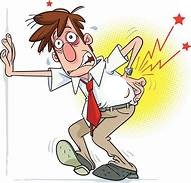
Sciatic Pain . Sciatica pain can be almost anywhere along the nerve pathway. But it’s especially likely to follow a path from the lower back to the buttocks. And the back of the thigh and calf.
However, the pain can vary from a mild ache to a sharp, burning pain. Sometimes it can feel like a jolt or electric shock. And it can be worse when coughing, sneezing, or sitting for a long time. So then, usually, sciatica affects only one side of the body. But, some people have numbness, tingling, or muscle weakness in the leg or foot. Also, one part of the leg can be in pain, while another part can feel numb.
When to see a doctor

Sciatic Pain . Ordinarily, mild sciatica usually goes away over time. In this case, call your primary care provider if self-care measures don’t ease symptoms. Also, call if the pain lasts longer than a week, is severe, or gets worse. Get immediate medical care for:
- Sudden, severe pain in the lower back or a leg and numbness or muscle weakness in the leg
- Pain after a violent injury, such as a traffic accident
- Trouble controlling bowels or bladder
Causes
Sciatic Pain . Sciatica occurs when the sciatic nerve becomes pinched. The cause is usually a herniated disk in the spine or an overgrowth of bone, sometimes called bone spurs, forming on the spinal bones. More rarely, a tumor can put pressure on the nerve. However, a disease such as diabetes can damage the nerve.
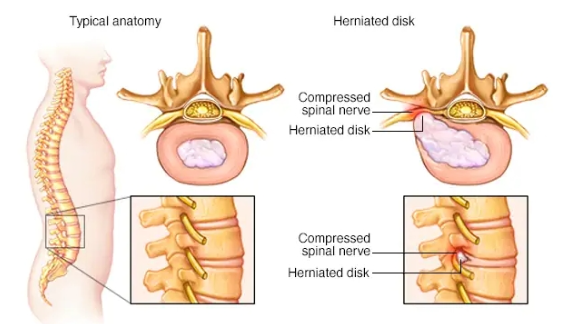
Sciatica happens when something presses or rubs on the sciatic nerve.
Causes include:
- a slipped disc (the most common cause) – when a soft cushion of tissue between the bones in your spine pushes out
- spinal stenosis – narrowing of the part of your spine where nerves pass through
- spondylolisthesis – when one of the bones in your spine slips out of position
- a back injury
Risk factors

Sciatic Pain . Risk factors for sciatica include:
- Age. Age-related changes in the spine, such as herniated disks and bone spurs, are the most common causes of sciatica.
- Obesity. Being overweight increases stress on the spine.
- Environment. A job that requires twisting the back, carrying heavy loads, or driving a motor vehicle for long periods might play a role in sciatica.
- Prolonged sitting. People who sit a lot or don’t move much are more likely to develop sciatica than active people. Computers keep you sitting for long periods of time which can cause this
- Diabetes. This condition, which affects the way the body uses blood sugar, increases the risk of nerve damage.
Complications

Sciatic Pain . Most people recover fully from sciatica, often without treatment. However, sciatica can damage nerves. Seek immediate medical attention for:
- Loss of feeling in the affected leg
- Weakness in the affected leg
- Loss of bowel or bladder control
Prevention

Sciatica a Pain for Older Adults. It’s not always possible to prevent sciatica, and the condition can come back. So then, to protect your back:
- Exercise regularly. To keep the back strong, work the core muscles — the muscles in the abdomen and lower back are needed for good posture and alignment. A healthcare provider can recommend activities.
- Keep good posture when sitting. Choose a seat with good lower back support, armrests, and a swivel base. For better low back support, place a pillow or rolled towel in the small of the back to keep its normal curve. Keep knees and hips level.
- Use your body correctly. When standing for long periods, rest one foot on a stool or small box from time to time. When lifting something heavy, let your legs do the work. Hold the load close to your body. Don’t lift and twist at the same time. Find someone to help lift heavy or awkward things.
How you can ease the pain yourself

Sciatica usually gets better in 4 to 6 weeks, but it can sometimes last longer.
To help relieve your pain and speed up recovery:
DO
- Carry on with your normal activities as much as possible
- regular exercises for sciatica
- start gentle exercise as soon as you can – anything that gets you moving can help
- hold heat packs to the painful areas – you can buy these from pharmacies
- ask your pharmacist about painkillers (paracetamol is unlikely to help and it’s not clear how much NSAIDs help with sciatica)
- put a small, firm cushion between your knees when sleeping on your side, or several firm pillows underneath your knees when lying on your back.
DO NOT
- do not sit or lie down for long periods – even if moving hurts, it’s not harmful and can help you get better faster
- do not use hot water bottles to ease the pain – you could scald yourself if your skin is numb
See a Doctor if the Pain
- has not improved after trying home treatments for a few weeks
- is getting worse
- is stopping you from doing your normal activities
Go to A&E or Call Your Emergency No If You
- have sciatica on both sides
- have weakness or numbness in both legs that’s severe or getting worse
- have numbness around or under your genitals, or around your bottom (anus)
- find it hard to start peeing, cannot pee, or cannot control when you pee – and this is not normal for you
- do not notice when you need to poo or cannot control when you poo – and this is not normal for you
These could be symptoms of a serious back problem that needs to be treated in hospital as soon as possible.
Eat to Thrive How Everyday Foods Support Strength, Energy and Health After 60 Available on Amazon Books

https://www.amazon.co.uk/dp/B0GT6JWP6Z
In Conclusion
Sciatica is a pain that can be mild but also extremely painful. you should always seek medical advice if you are in pain that lasts over time. It is easy to take self-help measures to try to ease the discomfort, but your doctor is the best place to go if they do not work. Remember, sciatic pain can damage nerves over time, and that in some cases can be permanent nerve damage, something you really do not want.
Important Note *
Remember that everyone is different, it is ultimately YOUR RESPONSIBILITY to find what your body responds to. So please do your due diligence before trying anything new, including getting Medical Advice to ensure your safety and peace of mind.
Connect with me and leave a comment.ioner Fitness – Helping You Stay Strong, Steady, and Self-Reliant
In Conclusion
Strong knees mean a stronger you.
Important Note *
Remember that everyone is different, it is ultimately YOUR RESPONSIBILITY to find what your body responds to. So please do your due diligence before trying anything new, including getting Medical Advice to ensure your safety and peace of mind.
Connect with me and leave a com