What Really Matters as We Grow Older i e Longevity

1. Keep Moving
The Keys to Longevity. If I had to choose one habit that belongs near the top of the longevity list, it would be regular physical activity.
Our bodies were designed to move, and ageing does not change that.
Walking, swimming, cycling, gardening, household activities and structured exercise can all contribute.
For adults aged 65 and over, current health guidance recommends regular aerobic activity together with muscle-strengthening exercise and activities that develop balance.
But don’t become obsessed with numbers.
If you are currently inactive, simply doing more than you do today is a worthwhile beginning.
Walk a little farther. Take the stairs if you safely can. Get out of the chair regularly. Find an activity you enjoy and are likely to continue.
Consistency matters far more than an enthusiastic exercise programme that lasts two weeks.
2. Protect Your Strength
The Keys to Longevity. This deserves its own section because maintaining muscle becomes increasingly important as we grow older.
We naturally tend to lose muscle mass and strength with age, but that doesn’t mean we should simply accept becoming weak.
Resistance exercise can include weights, resistance bands, bodyweight exercises or other activities that make our muscles work.
Strength helps us with ordinary life:
Getting out of a chair.
Carrying shopping.
Climbing stairs.
Maintaining our balance.
Recovering when we stumble.
Remaining independent.
We often talk about exercise in terms of living longer. I prefer to think of strength training as helping us remain capable during the years we have.
3. Don’t Forget Balance
The Keys to Longevity. A longer life is not much use if a preventable fall suddenly takes away our independence.
Balance and strength work become particularly important in later life. Simple exercises can help maintain stability and confidence, provided they are appropriate for your ability.
Falls should not simply be accepted as an inevitable part of getting older.
If your balance has noticeably deteriorated, or you have experienced unexplained falls or dizziness, speak with a healthcare professional rather than simply trying to exercise your way through the problem.
4. Eat to Support the Body You Want to Keep
The Keys to Longevity. There is no single “longevity diet.”
You don’t need an unusual berry from the other side of the world or an expensive supplement promising to turn back the clock.
A sensible diet should provide the body with the nutrients it needs.
For older adults, that means paying particular attention to good-quality protein, vegetables and fruit, whole or minimally processed foods where practical, healthy sources of fat, fibre and adequate fluids.
Protein deserves particular attention because it helps support muscle maintenance alongside resistance exercise.
The aim is not perfection.
It is a pattern of eating that you can sustain.
5. Give Sleep the Respect It Deserves
The Keys to Longevity. Sleep is sometimes treated almost as wasted time.
It isn’t.
Older adults still need adequate sleep, and poor sleep can affect physical and mental wellbeing.
Try to maintain a regular sleeping routine and create conditions that encourage good-quality sleep.
And if you regularly sleep badly, snore heavily, wake gasping, or remain extremely tired during the day, don’t simply dismiss it as ageing. It may be worth discussing with your doctor.
6. Don’t Smoke — and It Is Still Worth Quitting
The Keys to Longevity. There is no longevity advantage to smoking.
Tobacco increases the risk of numerous serious diseases, including cardiovascular disease, respiratory disease and cancers.
Importantly, giving up smoking can still produce health benefits even later in life.
So if someone reading this thinks, “I’ve smoked for 40 years, so what’s the point of stopping now?”
There is still a point.
7. Look After the Problems You Already Have
The Keys to Longevity. Healthy ageing isn’t about pretending illness doesn’t exist.
Blood pressure, diabetes, cholesterol problems and other chronic conditions are not improved by ignoring them.
Attend appropriate health checks. Take prescribed medication correctly. Discuss changes in your health with your healthcare professional.
And don’t ignore new symptoms simply because you are getting older.
Ageing can explain many changes.
It should not automatically be blamed for every change.
8. Stay Connected
The Keys to Longevity. We spend a great deal of time talking about exercise and nutrition, but human beings also need other human beings.
Family, friends, neighbours, clubs, groups, volunteering and community activities can all help us remain connected with the world around us.
You don’t need hundreds of friends.
But isolation and loneliness should not be regarded as an unavoidable consequence of ageing.
Sometimes maintaining relationships requires effort.
I think it is effort worth making.
9. Keep Using Your Mind
The Keys to Longevity. Retirement from employment should not mean retirement from curiosity.
Read.
Take up a hobby.
Write.
Travel if circumstances allow.
Learn to use new technology.
Teach someone something you know.
Ask questions.
The subject itself matters less than continuing to engage with life.
We may stop working for an employer, but there is no requirement to stop growing.
10. Have a Reason to Get Up Tomorrow
The Keys to Longevity. This final point is difficult to measure with numbers, but I think it matters enormously.
Purpose.
That purpose does not have to be grand.
It might be looking after a garden.
Helping grandchildren.
Caring for a partner.
Walking the dog.
Volunteering.
Writing.
Learning.
Exercising.
Helping somebody else.
Having something that matters to us gives structure and meaning to our days.
Longevity should never become merely a competition to accumulate birthdays.
At 60, 70, 75 or 80, I don’t think our objective should simply be:
“How many more years can I get?”
A better question might be:
“What can I do today to give myself the best chance of enjoying the years still ahead?”
And that is a question worth asking at any age.
None of those things guarantees a long life.
Anyone who promises you that is promising something they cannot possibly know.
But they can help improve our chances of something I believe is even more valuable:
A healthier later life.
And that is a question worth asking regardless of age.
Ian, The Pensioners Pensioner
Recommended Reading
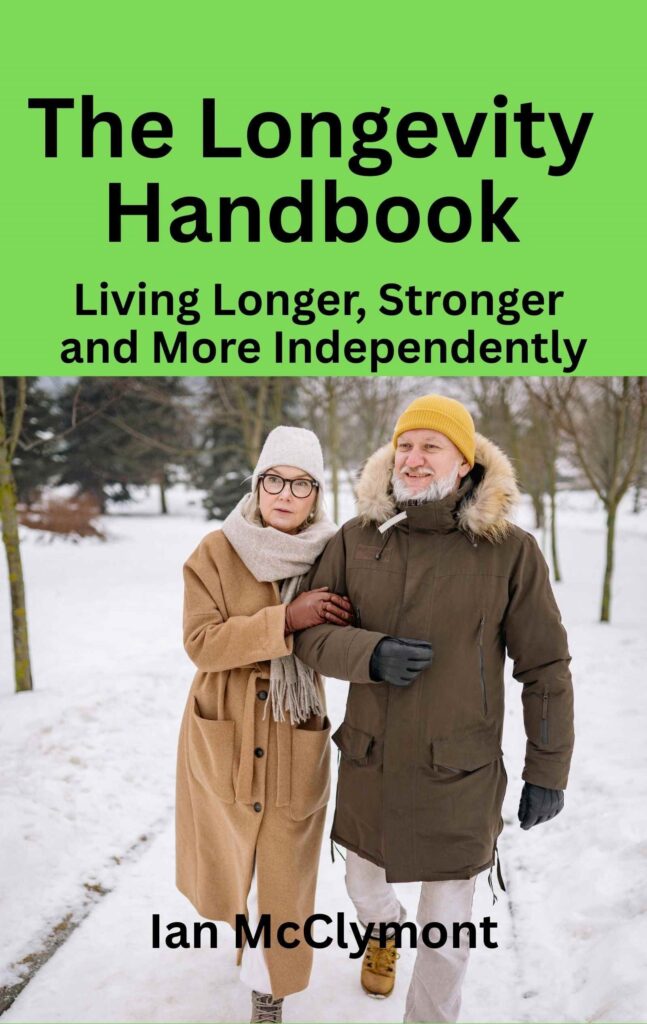
Longevity is not just about adding years to life.
It is about adding life to those years.
For many older adults, the challenge is not simply ageing — it is:
- Staying strong
- Maintaining independence
- Keeping the mind active
- Continuing to enjoy daily life
This book has been written to provide a clear and practical guide to doing exactly that.
In Conclusion
We cannot control everything about how long we live.
But we can influence how we live.
Every walk, every sensible meal, every strength session, every good night’s sleep, every friendship maintained and every reason we find to remain interested in tomorrow contributes to the bigger picture.
There is no magic secret to longevity.
Perhaps the real secret is much less exciting:
Look after the body you have, keep using it, keep using your mind, stay connected to other people and keep participating in life.
The goal is not simply to add years to your life.
It is, wherever possible, to add strength, independence and purpose to those years.
Important Note *
Remember that everyone is different, it is ultimately YOUR RESPONSIBILITY to find what your body responds to. So please do your due diligence before trying anything new, including getting Medical Advice to ensure your safety and peace of mind.
Connect with me and leave a comment